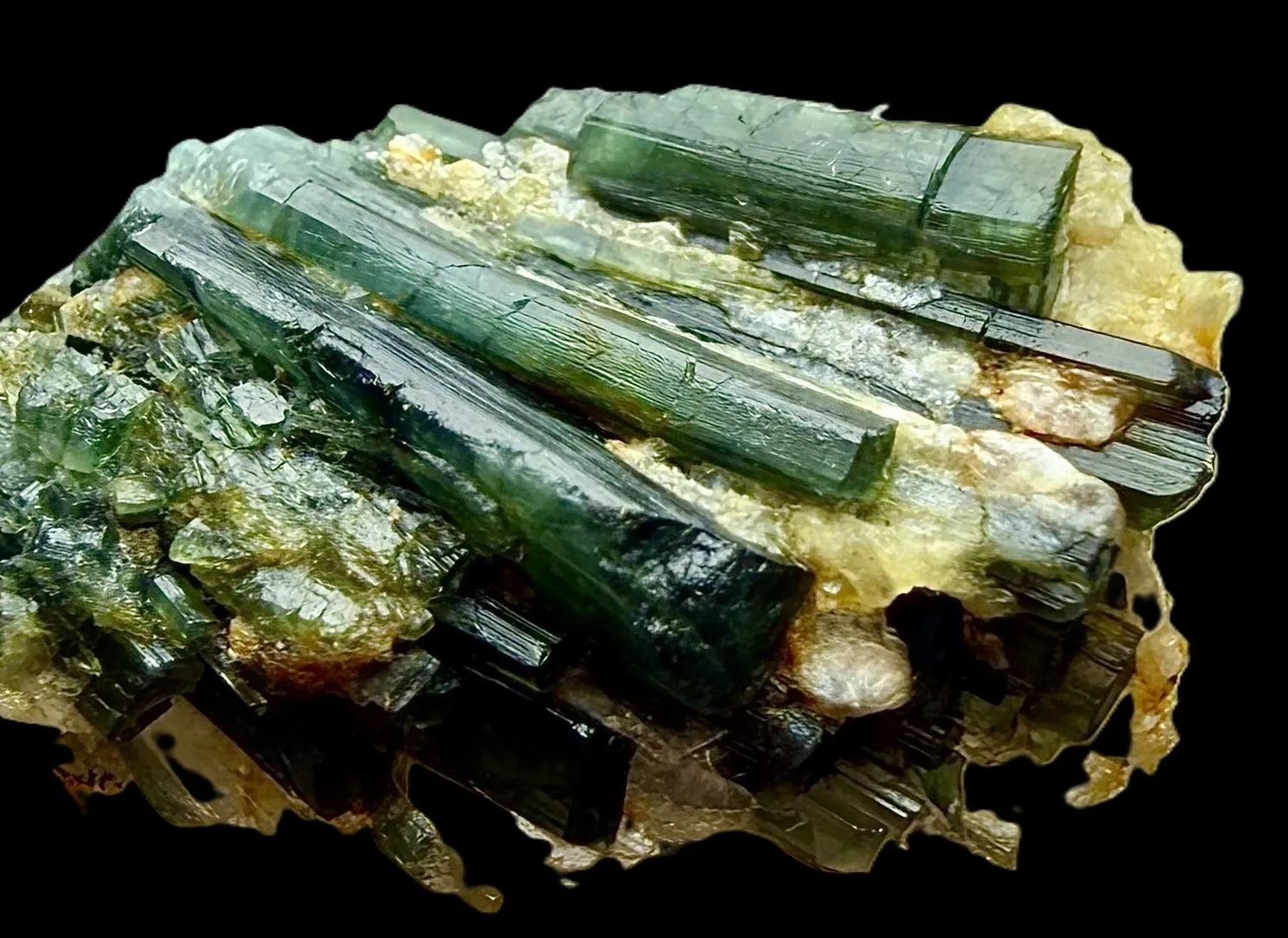
Mineralogical Characterization: Tourmaline on Quartz Matrix
This specimen from Afghanistan documents a pegmatitic mineralization process, where the formation of large, well-developed silicates occurred during the late, low-temperature stage of magmatic evolution. The specimen displays a clear paragenetic differentiation between the primary quartz matrix and the secondary tourmaline crystals.
Mineralogical Composition and Matrix Formation
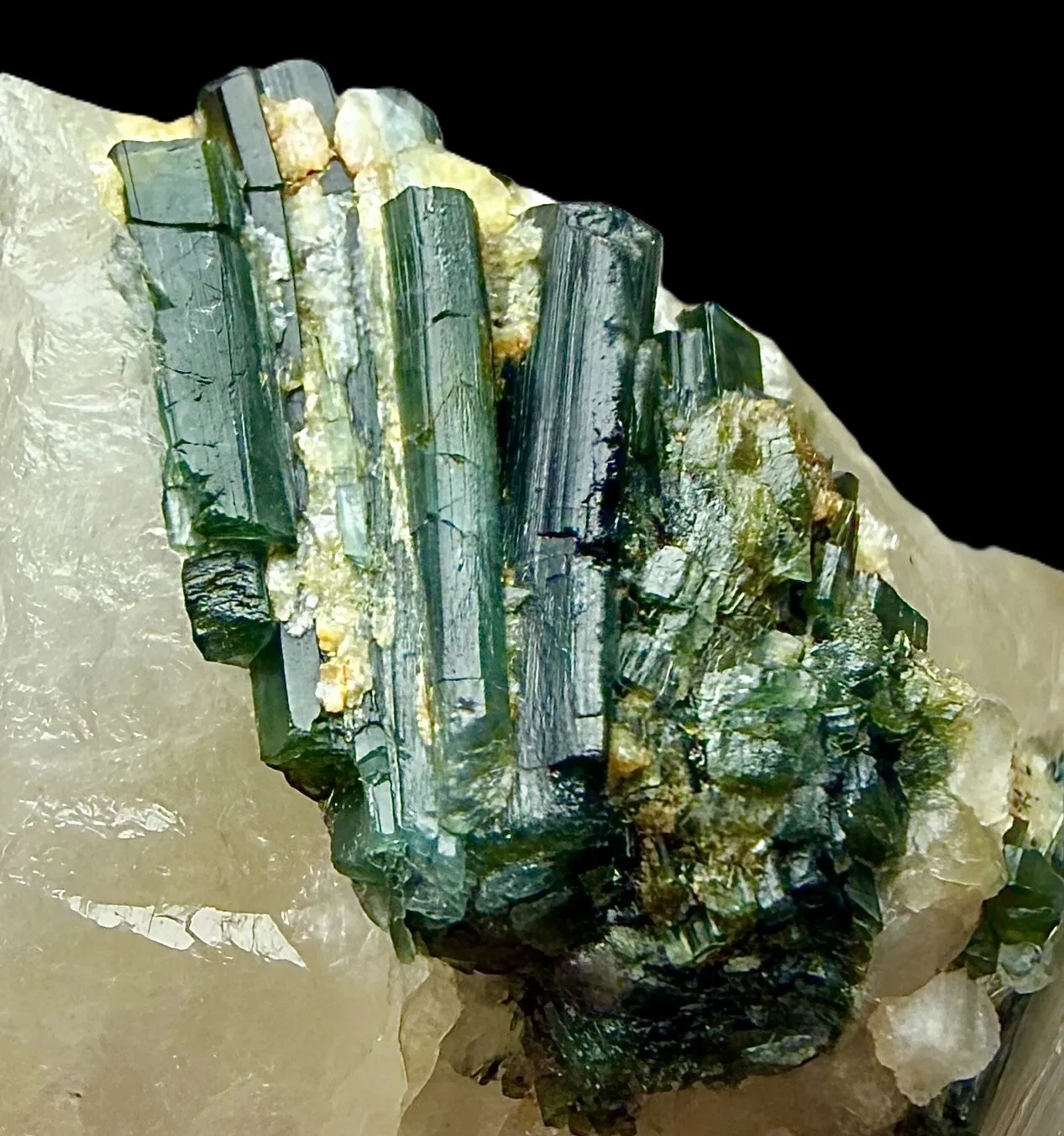
The foundation of the specimen consists of a substantial, massive quartz matrix.
Quartz (SiO₂): As the primary phase of the pegmatitic system, quartz forms the structural base. The crystalline consistency and the distinct fracture patterns of the matrix indicate undisturbed growth within a miarolitic cavity, where the residual melt potential allowed for high mobility of silica-rich fluids.
Crystallization of the Tourmaline Phase
The tourmaline crystals perched on the matrix—likely belonging to the elbaite group—represent an advanced stage of mineralization.
The habit of the tourmaline is defined by its characteristic prismatic, partially parallel growth within the trigonal crystal system. The sharp edges and the vertical striations on the prism faces testify to idiomorphic growth under stable hydrothermal conditions.
This process can be interpreted in three stages:
Phase I (Magmatic Crystallization): The precipitation of the quartz matrix, providing a stabilizing framework within the pegmatite body.
Phase II (Geochemical Enrichment): As the residual melt differentiated further, it became locally enriched with boron, lithium, aluminum, and transition metals (such as iron or chromium, which are responsible for the green coloration).
Phase III (Deposition): The tourmalines crystallized onto the quartz surfaces. The density of the crystal cluster attests to a sufficient saturation of the fluid with B-Si-Al complexes during cooling, which favored the development of the distinct prismatic habit.
Paragenetic Implications
The specimen illustrates the transition from a primary silicate phase to a complex, boron- and lithium-rich crystallization phase at the end of the pegmatitic sequence. The distinct morphological contrast between the massive quartz and the idiomorphic, transparent tourmalines documents a typical geochemical differentiation process characteristic of the pegmatitic deposits in Afghanistan. The spatial arrangement of the tourmalines on the quartz base allows for a clear reconstruction of the successive crystallization sequence within a specific miarolitic cavity.