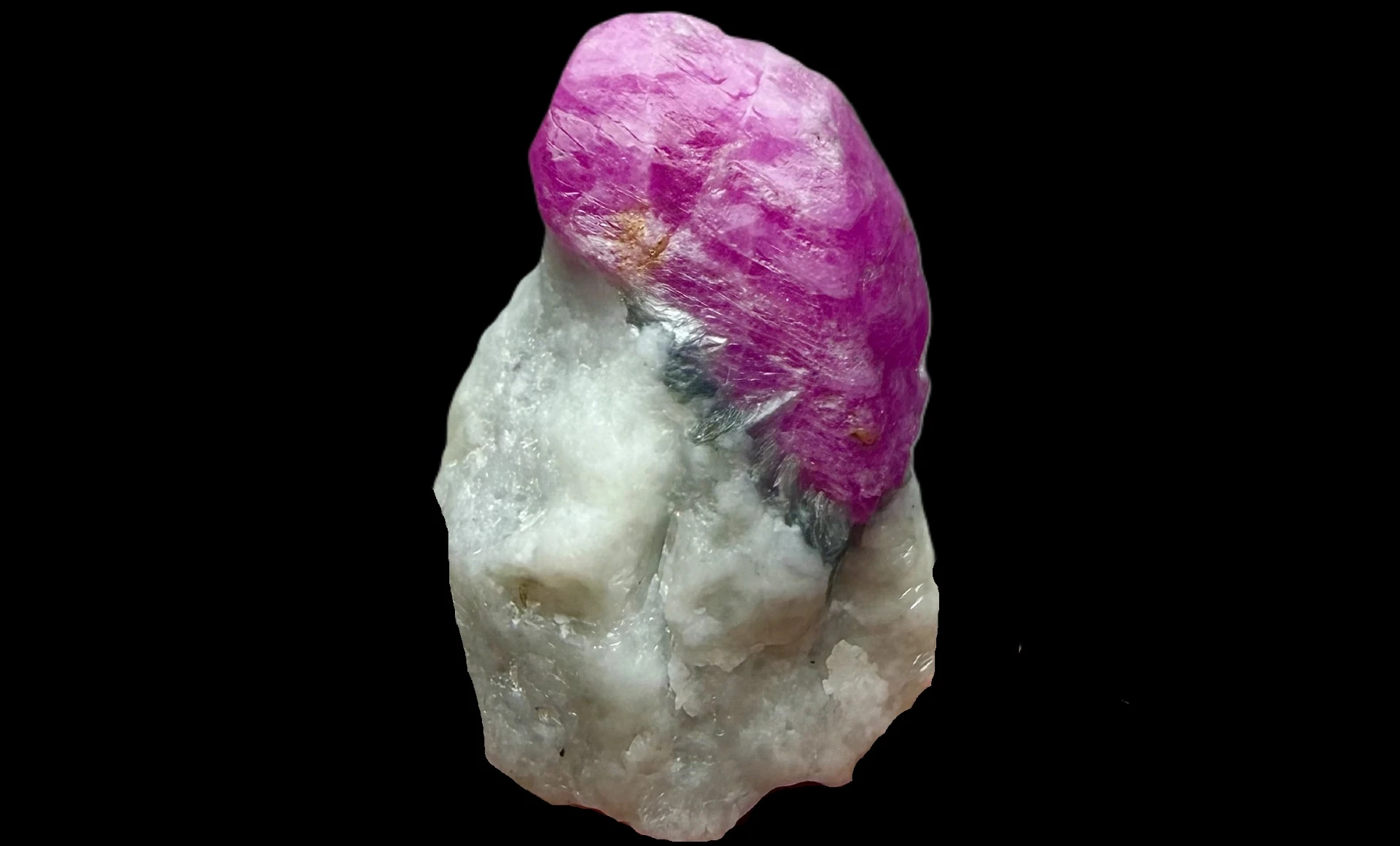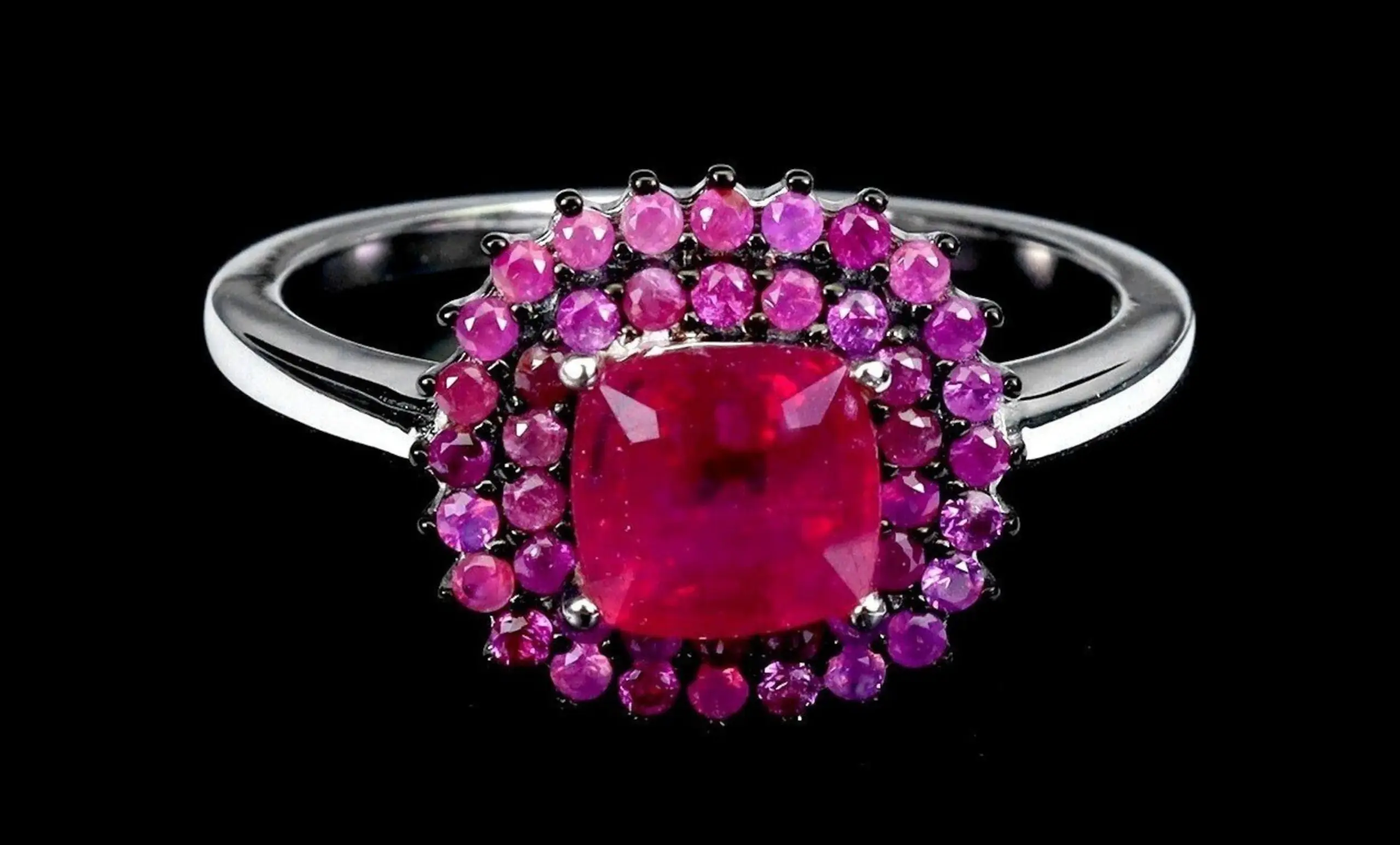
Background: All rubies offered here are of natural origin. Due to their natural characteristics, many of these rough stones exhibit fissures or cavities that would significantly impair their clarity. To make these stones suitable for jewelry, the fissures in some of the stones offered here have been filled with lead-rich glass. This process is a standard treatment in the industry and is disclosed for every stone to which it applies.
Important Note for Buyers: These stones are not intended as an investment. While untreated rubies are rare natural products, these are modified goods. However, they offer the opportunity to acquire an aesthetically appealing ruby at a fair price, which many buyers seek for everyday jewelry.
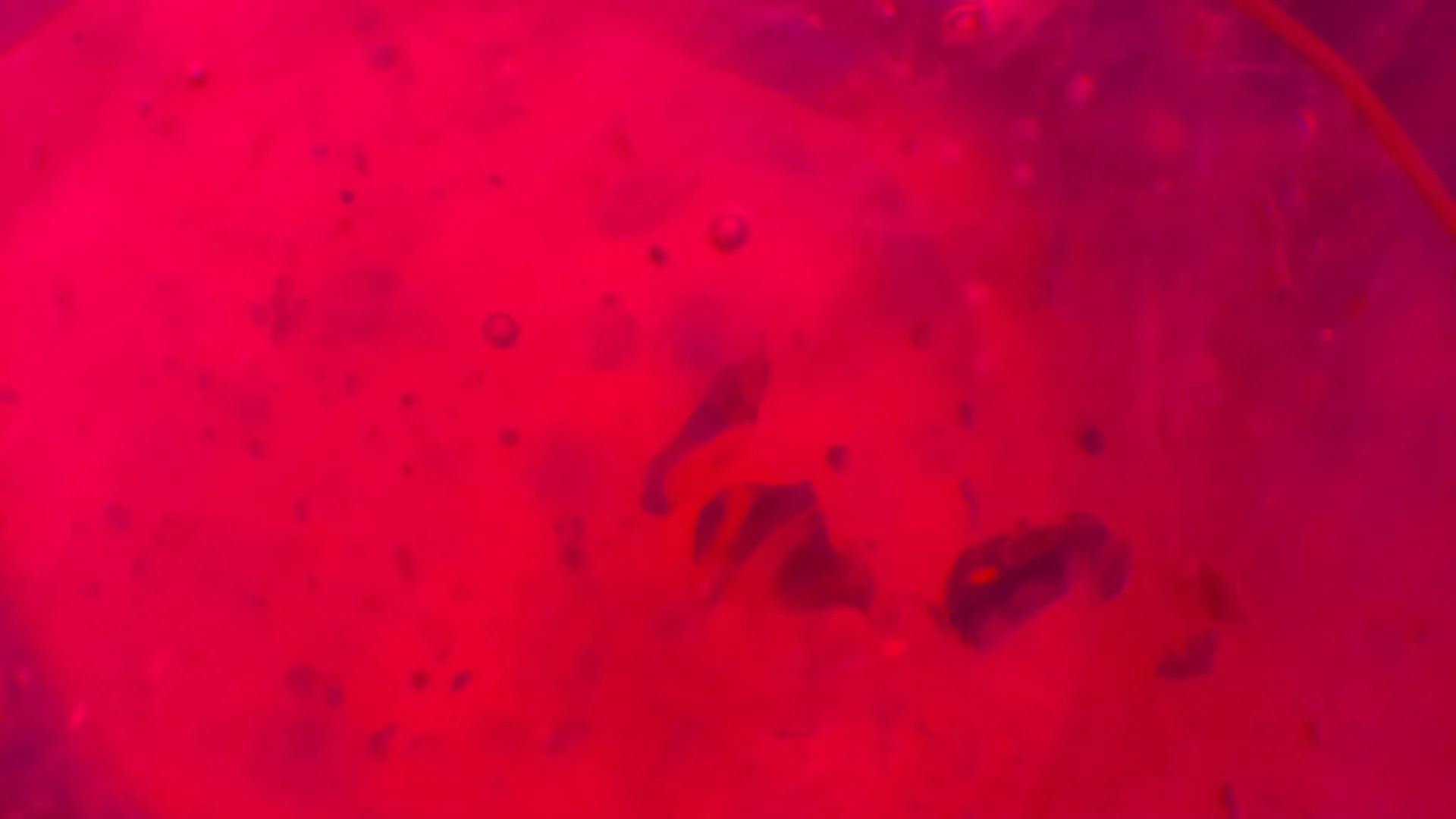
Microphotograph of a natural mineral inclusion. The rounded morphology indicates thermal resorption processes, likely caused by heat treatment of the ruby.
Gemological Analysis: The glass filling can be clearly identified under a microscope. We use this analysis to ensure transparency regarding the stone’s composition: The microscopic examination reveals a complex internal world that requires careful interpretation.
Gas Bubbles as Evidence of Treatment: Spherical or slightly oval gas bubbles are a clear artifact of the filling process. They occur when gas is trapped within the filled fissure structures during the melting process. In contrast to natural inclusions, they often appear in clusters or “cloud-like” aggregations, which are typical of a synthetic or treated corundum structure.
Natural Mineral Inclusions: Distinct from these are solid mineral inclusions, which often exhibit an irregular, angular shape or a form rounded by thermal resorption processes. These inclusions are not artifacts of artificial manufacturing, but rather evidence of natural formation within the host rock. Their presence serves as significant proof of the natural origin of the corundum base material.
Differentiation of Inclusion Morphology: The interpretation of microscopic findings requires precise distinction: while perfectly spherical, vacuum-based gas bubbles act as artifacts of a glass filling, natural inclusions can also appear rounded due to thermal influences. The decisive factor here is the morphological composition: while gas bubbles exhibit an isolated, geometrically perfect form, natural inclusions “resorbed” by heat often show an irregular or angular basic structure. This subtle differentiation is the crucial indicator for unequivocally identifying the natural integrity of the host crystal despite thermal modifications.
UV Fluorescence: All of my rubies exhibit significant UV activity. This natural fluorescence, caused by the chromium characteristic of rubies, serves as additional confirmation of their natural origin. Although it is known that isolated UV-active imitations exist, the strong fluorescence, in conjunction with the observed internal inclusion patterns, remains a reliable indication of the authenticity of the corundum material used.